
Salmon: The fish with the highest amount of omega-3 unsaturated fatty acids
The nutritional value of salmon
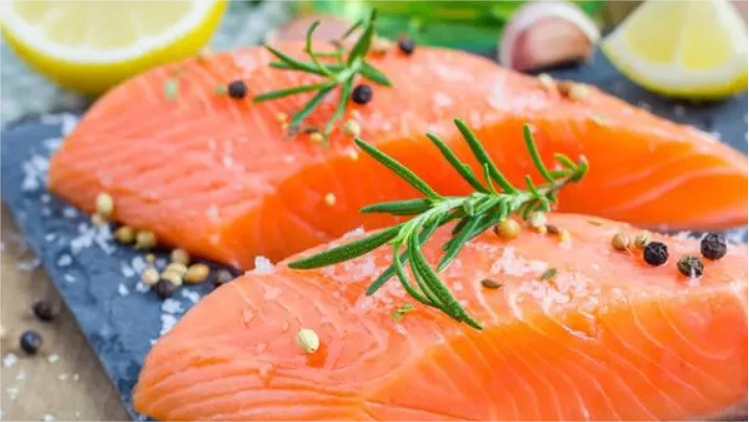
Salmon grows in cold sea waters and is known as the "Emperor of the ice sea" by the international food industry. With the continuous improvement of economy and living standards, people's consumption demand for seafood is growing rapidly. Among many seafood, salmon is favored by more and more people for its unique taste and rich nutrition.
Fish with the highest levels of omega-3 unsaturated fatty acids
Salmon is rich in unsaturated fatty acids, is the highest content of omega-3 fatty acids of all fish fish, Norwegian salmon, for example, per 100 grams of Norwegian salmon contains 2.7 grams of omega-3 fatty acids. A 150g Norwegian salmon can provide 1 to 7 grams of Marine omega-3 fatty acids (EPA, DPA and DHA), the International Society for Fatty Acid and Lipid Research (ISSFAL) recommends intake of 650 mg of EPA and DHA per day to prevent cardiovascular and cerebrovascular diseases, so it is recommended to eat fatty fish twice a week to take omega-3 fatty acids.
Regular consumption of salmon can effectively reduce blood pressure, cholesterol and the incidence of heart disease. The omega-3 unsaturated fatty acids it contains are essential substances for the brain, retina and nervous system, and have the effect of enhancing brain function, preventing Alzheimer's disease and preventing vision loss. It is found in higher levels in cod liver oil.
Scientific data show that adequate intake of essential omega-3 fatty acids is essential for optimal mental health and brain function, and can even improve intelligence. Omega-3 fatty acids also help repair cells damaged during exercise.
"High and low" salmon
High in vitamins and minerals: Salmon is rich in vitamins A, B1, B2, B3, D, E, and is a good source of minerals such as calcium, iron, zinc, magnesium, and phosphorus. Because it is rich in vitamin D, it can promote the absorption and utilization of calcium by the body and contribute to growth and development.
The main form of vitamin A is retinol, which is closely related to the function of the retina and is an important element in the production of synthetic eye pigments. Vitamin A is also important for bone formation, maintaining intact mucous membranes, and preventing infections.
Vitamin B12 is an important element in the synthesis of red blood cells, and a deficiency of vitamin B12 can lead to anemia.
High protein and amino acids: 100 grams of Norwegian salmon contains 18.4 grams of protein and 19.8 grams of amino acids.
Low calories: Norwegian salmon contains less than 150 calories per 100g.
Low cholesterol: Norwegian salmon has less than 70 mg of cholesterol per 100 grams.
Therefore, salmon is suitable for both young and old, especially for patients with cardiovascular diseases and mental workers, students taking tests are more beneficial.
Antioxidant: astaxanthin
Salmon also has a powerful antioxidant called astaxanthin, which gives salmon its orange-red color. Astaxanthin can effectively fight free radicals, delay skin aging, and has high antioxidant function for the human body.
It has beauty and beautifying effect
A large number of studies have confirmed that collagen loss is the main cause of skin problems such as skin relaxation, lack of elasticity, reduced resistance, wrinkles and color spots, and lack of hydroxyproline and proline is the main cause of collagen loss. Hydroxyproline is mainly found in animal collagen and is the signature component of collagen. Other proteins basically do not contain hydroxyproline. Hydroxyproline is essential to the synthesis of collagen in the human body, and hydroxyproline is formed only by proline hydroxylation, so collagen can be synthesized only when sufficient proline is ingested.
The experimental results show that the content of proline in salmon muscle is relatively rich, often eat salmon, can enhance the human body's ability to synthesize collagen, so as to achieve beauty, reduce the effect of wrinkles.
Various experimental results show that salmon nutrients are complete, protein content is high, not only the essential amino acids are complete, but also the ratio between essential amino acids is appropriate, more conducive to the human body's absorption of nutrients. Therefore, salmon is an ideal food source to supplement the body's nutrients.
Related Concept
FAO/WHO ideal protein model:
The ratio of total essential amino acids to total amino acids is about 40%, that is, EAA/TAA is about 40%.
DHA:
Docosahexaenoic acid, an essential omega-3 unsaturated fatty acid, is found in more fish oil. DHA is an important component of brain cell membrane, participates in the formation and development of brain cells, plays an important role in the extension of nerve cell axons and the formation of new processes, can maintain the normal physiological activities of nerve cells, and participates in the brain thinking and memory formation process.
EPA:
Eicosapentaenoic acid is one of the essential omega-3 fatty acids. Increasing the absorption of EPA has been shown to be effective in treating coronary heart disease, high blood pressure, and inflammation, such as rheumatoid arthritis.
(Source: Fish Market)